
Trees Hate You Late-Game Traps: Guns and Roots
The back half's trap list: bazooka bushes, exploding roots, chasing presents, snowman trees, the desert boulder and the final boss's spawn patterns.
Quick answer: The late game adds ranged trees, explosive roots, chasing presents and physics puzzles to the existing trap vocabulary. The tells stay fair, but the recovery windows shrink. Expect bazooka bushes, exploding roots, snowman ambushes and a final boss that spawns hazards under your feet.
This page covers the hazard set of the winter, desert, Loser Woods, palm and heaven sections. The route is in the late-game walkthrough→. The full family tree is in the trap encyclopedia→.
The back half is not a different game. It is the same game with less patience. A trap that gave you a full second in the opening forest now gives you half a second, and the safe path is often behind the hazard rather than beside it.
Only a few late-game traps have official names. The press release names "sucker punchin' trees," "meteoric shrubbery," "palm trees with coconut projectiles," "trees with guns," exploding roots and bazooka-wielding bushes. Other labels below are descriptive.
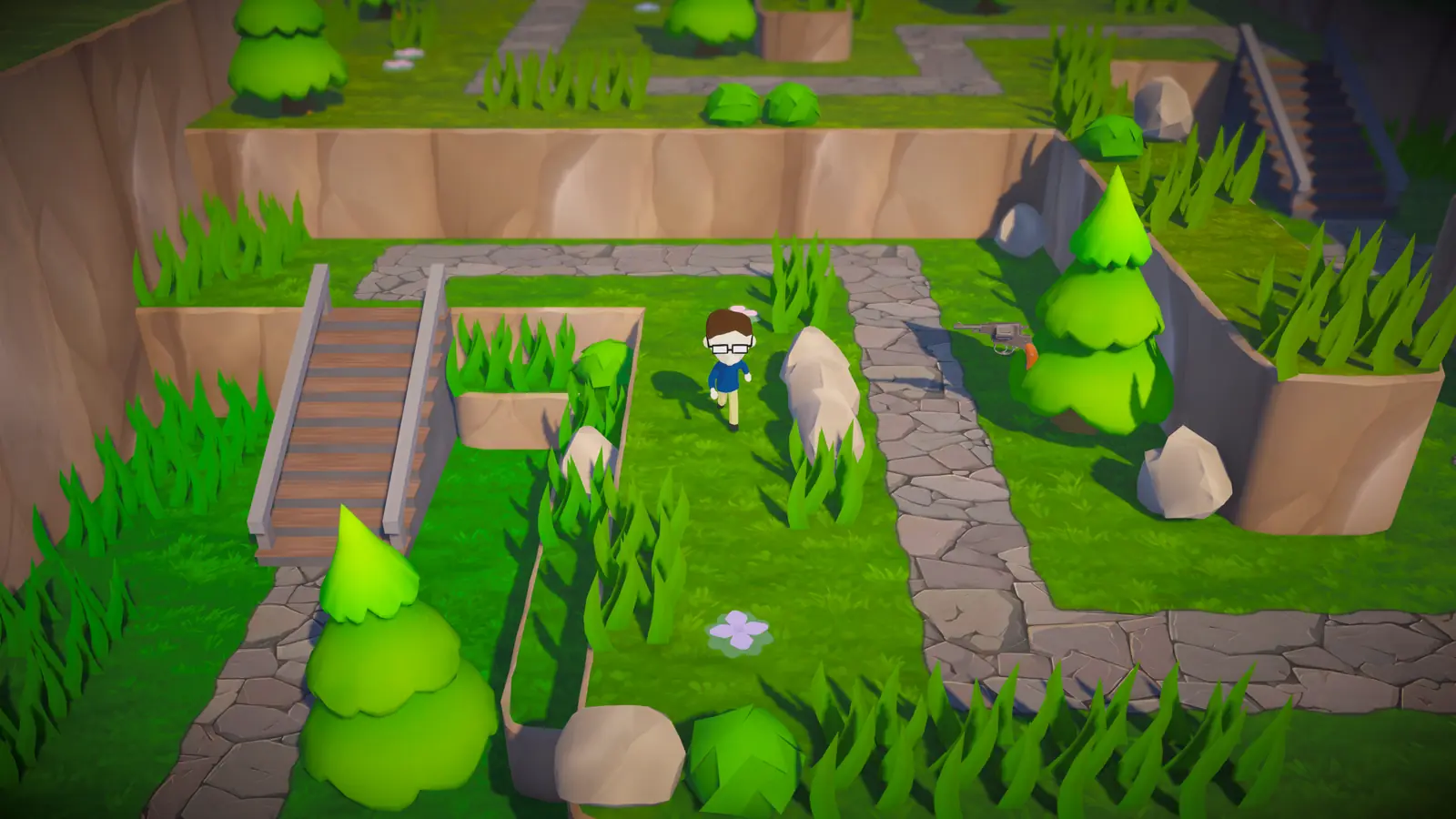
Ranged trees: guns, bazookas and missiles
The late game escalates the revolver tree into a small arsenal.
- Trees with guns. The same aimed-shot mechanic as the opening, but often in groups or on elevated ledges.
- Bazooka-wielding bushes. A slower projectile with a larger blast radius. The tell is a shoulder-mounted tube and a smoke puff.
- Missile trees. A tracking or arcing projectile, depending on the encounter. Break line of sight or move perpendicular to the arc.
- Trigger-happy pines. Multiple shots in a rhythm. Count the shots before crossing.
The counter is the same as the opening: move after the commit, not during the aim. Against groups, use the terrain. A tree cannot shoot through a trunk, a boulder or a fallen log.
Exploding roots
Exploding roots are a ground trap with a visible fuse. The root bulges, glows or pulses before it detonates. The blast radius is larger than the visual root.
Counter: Treat the root as a grenade with a short timer. Move away from the bulge, not along the path. If the root is between you and the exit, wait for the explosion and cross the crater.
The press release lists exploding roots as an official trap, which means they appear in scripted set pieces, not just random placements.
Chasing presents
The winter presents are the most aggressive new hazard. They flash, beep, chase and explode. Some are disguised as ordinary gifts until you get close.
Counter: Move away from the direction you came from. The present's chase is slower than your walk, but it cuts corners. If you run back toward a checkpoint, you may meet it head-on. Instead, circle around a tree or a snowbank and let it commit to the wrong line.
Do not try to outrun a present in a straight line through an open field. The explosion radius is generous.
Snowman trees and disguised scenery
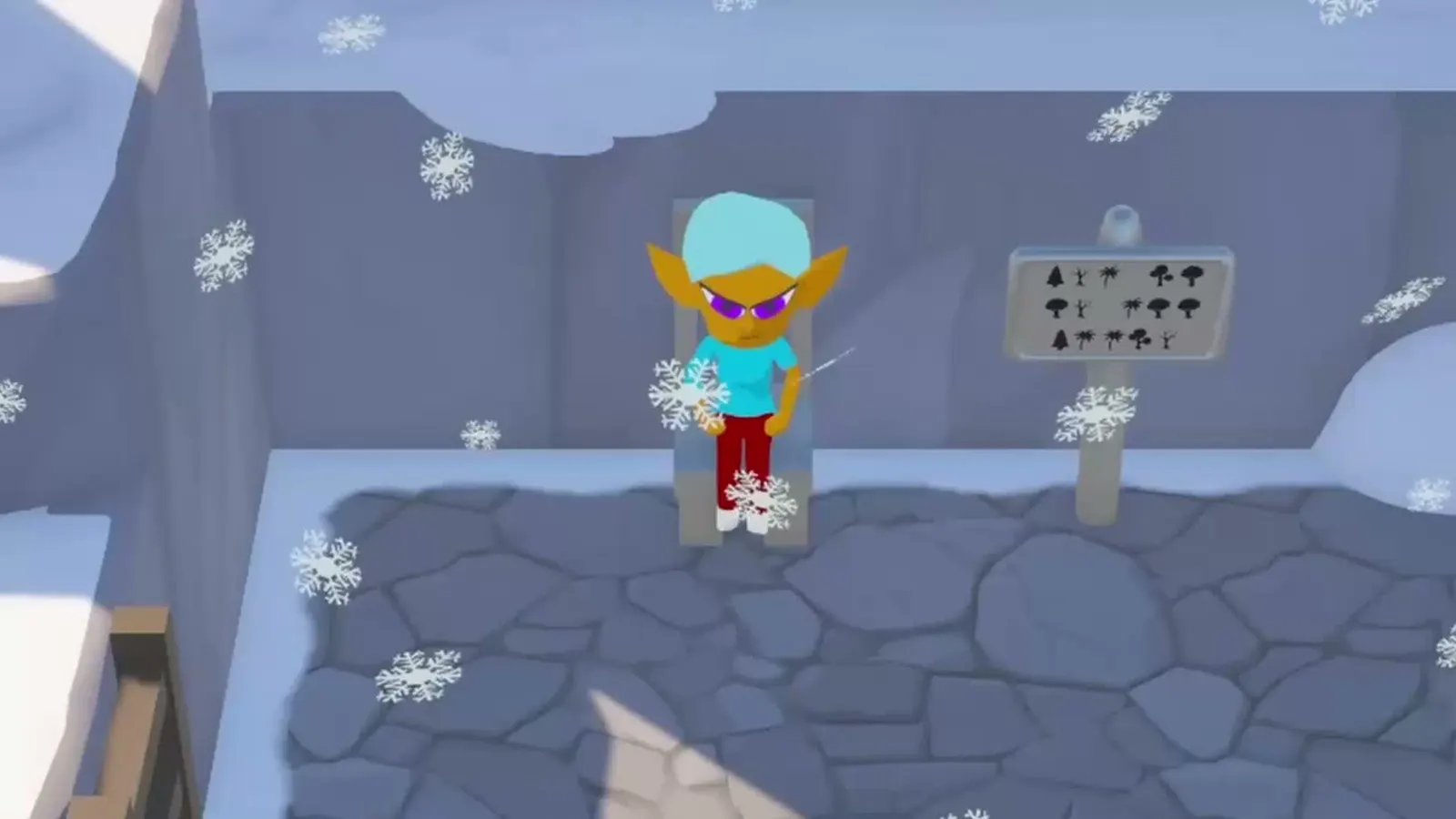
The snowman that reveals itself as a tree is an official clip. The tell is that the snowman is placed exactly where a blocker should be, and it does not react to the wind or the other snow effects.
Counter: Treat any too-perfect scenery object as a trap. Walk around it, not toward it. If it moves, you have already learned the tell for the next one.
The same design appears in the autumn and forest sections with bushes and stumps. The costume changes; the rule does not.
The desert boulder and the cactus
The desert section is a physics puzzle rather than a reflex trap. The boulder must reach a pressure plate, and the cactus or a rolling log interferes.
Counter: Clear the lane before pushing. Trigger the cactus with a short approach, let it commit, then push the boulder while it is recovering. If the boulder gets stuck, walk back to the checkpoint and reset.
Do not stand downhill of the boulder. It accelerates and does not stop for you.
Spider-leg trees
Some trees and bushes grow legs and walk. They are slower than they look, but they block paths and can push you into other hazards.
Counter: Do not try to run past one in a narrow corridor. Back into open ground, let it commit to a direction, then go around. They are not chase enemies; they are moving walls.
Sky trees and falling-tree rain
The late game includes trees that reach down from the sky and trees that fall in sequence. The sky tree is a vertical strike with a shadow tell. The falling-tree rain is a rhythm section with impact shadows.
Counter: Watch the ground shadows and the vertical silhouette. If you see a shadow growing under you, move laterally, not backward. The strike is narrow but fast.
The final boss: a trap set piece
The final encounter is not a single tree with a health bar. It is an arena that spawns hazards from the families above, faster and in combination.
Observed patterns from launch footage and reviews:
- Ground eruptions under the player.
- Projectile volleys from the arena edges.
- Falling debris with shadow tells.
- Add spawns that block the safe lane.
- Visual clutter that makes the next hazard hard to read.
Counter: Stay on the outer edge, keep the camera high enough to see the floor, and move after each commit rather than pre-dodging. Do not stand in the center. If the screen is too busy, retreat to a corner and wait for the sequence to reset.
There is no confirmed official name for the boss at launch. The endings page→ discusses the story; this page only covers the fight.
Late-game trap table
| Trap | Tell | Counter |
|---|---|---|
| Bazooka bush | Shoulder tube, smoke puff | Break line of sight, move after the puff |
| Missile tree | Arcing projectile, lock sound | Move perpendicular to the arc |
| Exploding root | Bulge or glow | Leave the blast radius, cross after detonation |
| Chasing present | Flash and beep | Circle a tree, do not run back |
| Snowman tree | Too-perfect placement | Walk around, not toward |
| Desert boulder | Rumble, dust | Clear the lane, push in bursts |
| Cactus | Shift in the sand | Trigger, wait, then push |
| Spider-leg tree | Legs unfold | Back into open ground, go around |
| Sky tree | Growing shadow | Move laterally |
| Boss spawns | Floor glow, shadow | Edge of arena, move after commit |
How to practice the late game
The fastest way to improve is Challenge Mode. It fixes trap placements, adds extra hazards and uses a fixed seed for random events. That makes it a repeatable practice range rather than a fresh shuffle every death.
If you are dying to the boss, practice the winter and desert sections first. The boss reuses their tells, and the pacing is easier to learn without the arena clutter.
What not to do
- Do not pre-dodge. The late game tracks your position during wind-ups. Moving early puts you in the commit zone.
- Do not fight the camera. If the boss fills the screen, back up until you can see the floor.
- Do not chase coins in hazard sections. The coins are bait; the checkpoint is the goal.
- Do not assume a safe corner. Some spawns target the edges specifically.
Official source: Official launch press release ↗ — the official trap examples and the four-world structure.
FAQ
Are the guns in the late game hitscan? The basic gun trees are aimed projectiles, not hitscan. You can step out of the lane after the shot.
Can you destroy the trees? Not in the base game outside heaven. The axe is a story tool and a heaven mechanic, not a general combat system.
Is the final boss randomized? The encounter has fixed phases with some spawn variation. Reviews describe it as luck-based because of spawn positions, not because the whole fight is random.
Does Challenge Mode make the boss harder? It adds hazards and fixes placements. The boss patterns are the same families, but the pressure is higher.
Can I skip the late-game sections? No. The four worlds are sequential. There is no level select at launch.
Sources
- Official launch press release ↗ — official trap names and biome list.
- DualShockers review ↗ — final boss and late-game impressions.
- Steam achievements ↗ — heaven and late-game achievements.
- Official Tykenn FAQ ↗ — platforms and content policy.