
Trees Hate You Midgame Traps: Fake Flags, Apples and Palms
The midgame trap set in Trees Hate You: reversed signs, exploding apples, fake checkpoints, hat thieves, the rolling sphere and coconut palms.
Quick answer: The midgame stops teaching single traps and starts combining them. Reversed signs feed you into apple barrages, fake checkpoints sit beside real ones, chests bait you into hat thieves, and palm trees launch bouncing coconuts. Read the object, not the sign.
Start with the chapter 2 walkthrough→ or go straight to the trap encyclopedia→ if you already know the route.
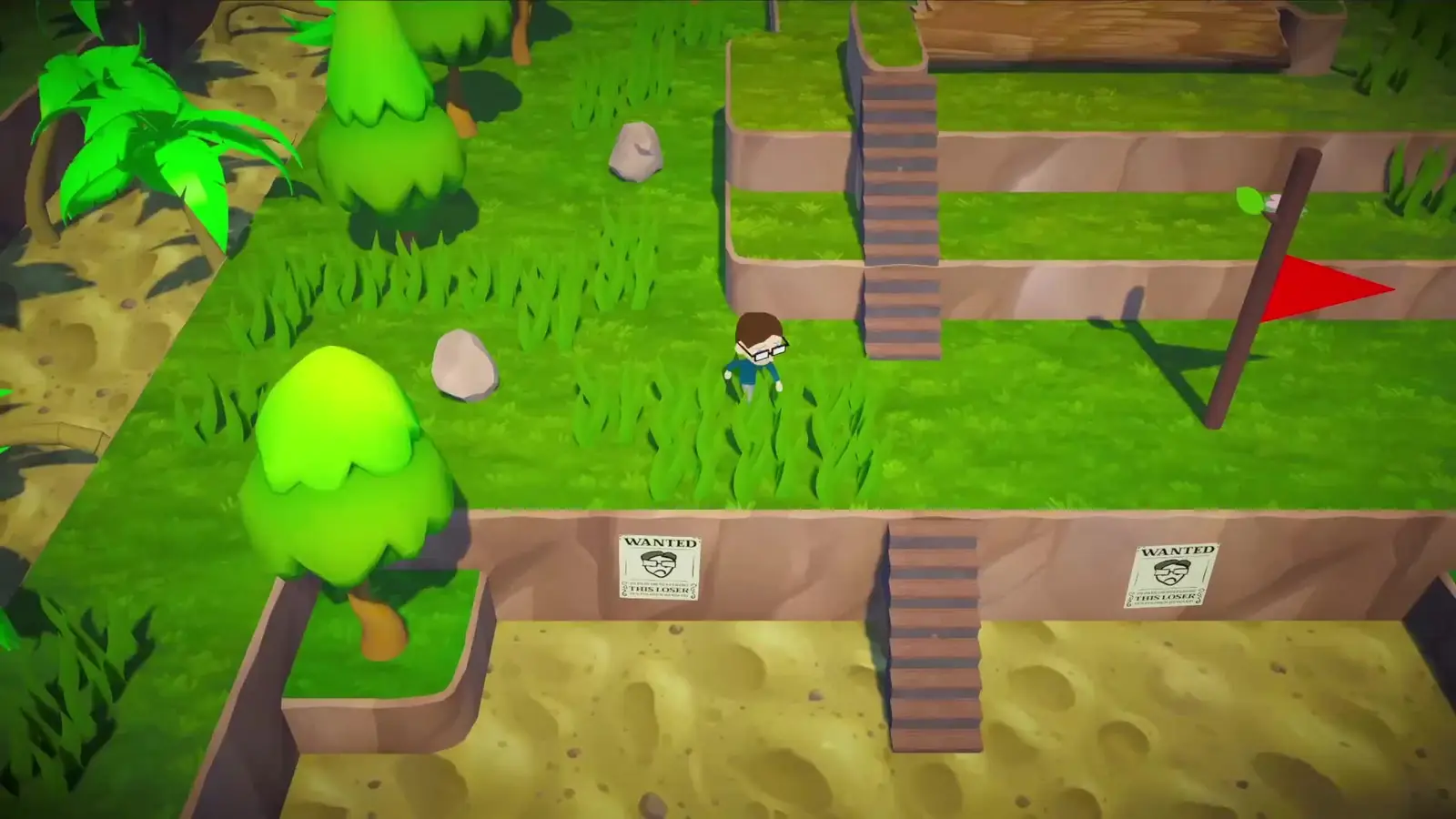
This page covers the trap families that appear after the opening forest and before the winter/desert sections. The route itself is in the chapter 2 walkthrough→. For the full taxonomy, see the trap encyclopedia→.
The midgame is where players start calling the game unfair. It is not unfair in the sense of random death; it is unfair in the sense that it uses your own habits against you. The reversed sign works because you have been trained to read signs. The fake checkpoint works because you have been trained to touch flags.
This page discusses the fake checkpoint and the hat thief in detail. Both are early midgame mechanics, but if you want to discover them cold, stop after the first section.
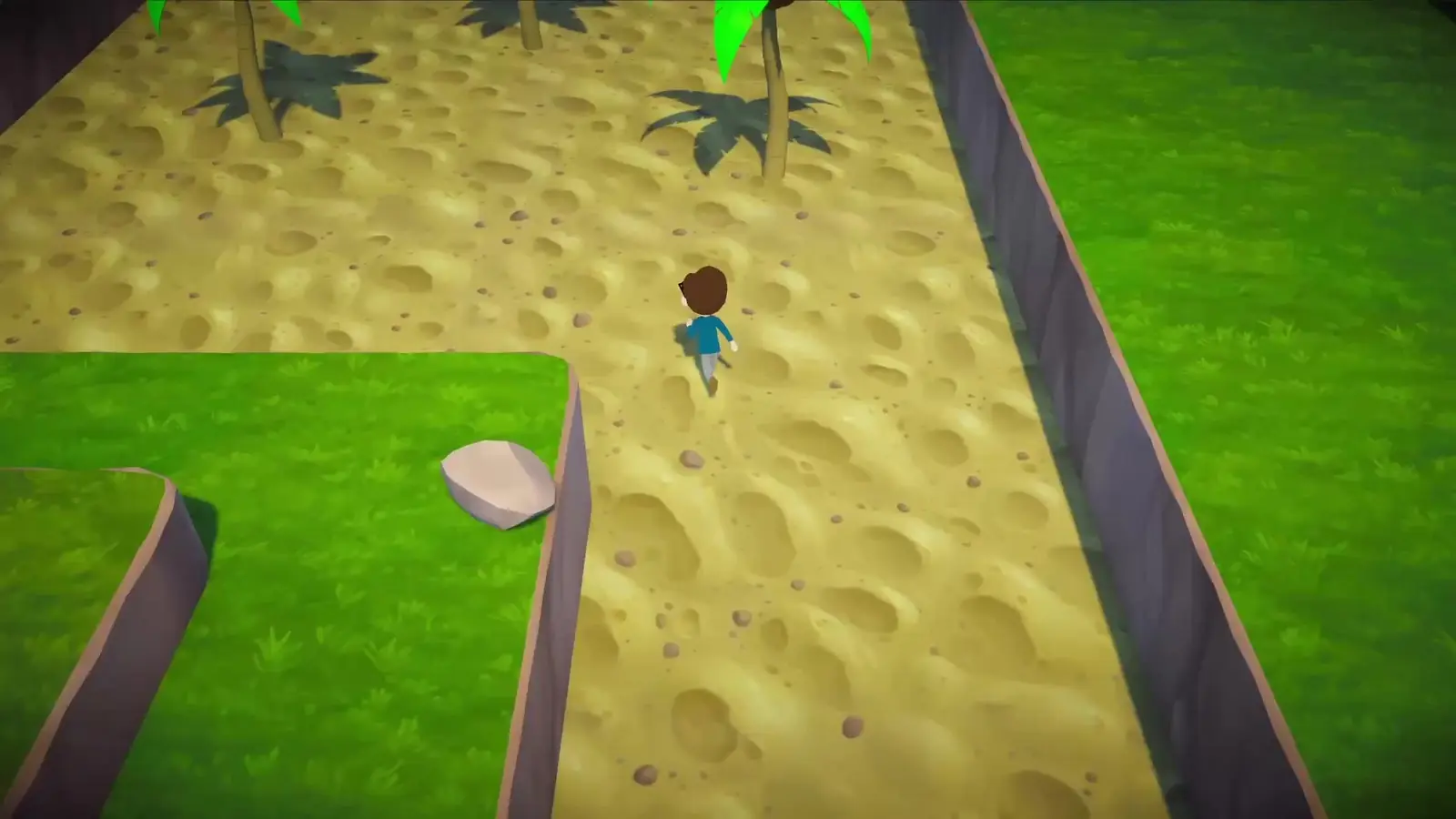
Reversed signs: the trap that uses your training
The first midgame sign cluster points one way and the correct route is the other. The sign is not broken or obscured; it is clean, readable and wrong.
Why it works: the opening level teaches you that signs are warnings. "Watch out!" kills you if you read it up close. "Be sure to read every sign" is the first line of the game. By the time you reach the fork, you have learned to trust the text and distrust the object. The reversed sign flips that.
Counter: Treat every sign as a description of danger, not a direction. If a sign says "this way," look for the danger it is pointing you toward. The safe route is usually the one with no signage at all.
Exploding apples: a moving trap, not a dropping one
The apple trees drop fruit that explodes on impact. The tell is a soft pop and a slight rustle in the canopy. The fruit does not fall straight down; it lands ahead of you if you are moving.
The counter is rhythm, not reaction. Cross each gap between canopies in one steady walk, then pause at the edge of the next. If you stop under a tree, the next apple lands on you. If you sprint, you arrive under the next tree at the wrong time.
The apples are the first trap that punishes both stopping and rushing. The safe speed is a walk with a plan.
Fake checkpoints: how to tell in under a second
A real checkpoint flag lights when you touch it. A fake one does one of three things:
- Bends away. The flag or the pole leans out of your reach as you approach.
- Stays dark. You touch it and nothing happens.
- Moves. A tree picks it up and carries it off.
The fake checkpoint in the demo appears on a staircase and bends away from the player. It looks like a rendering glitch until you see the pole flex. That flex is the tell.
The DEJAVU achievement, "Reactivate the first checkpoint," suggests the game expects players to return to old checkpoints and find them changed. If a checkpoint you already activated is dark again, it may have been moved or replaced.
Counter: Touch every flag, but do not relax until it lights. If it does not light, keep moving; the real one is usually within a screen.
Hat thieves and bait chests
The chest side path in the apple section contains a hat. The hat is real. The theft is also real. A tree can take the hat off your head, and the HATLOSER achievement requires you to lose five.
The chest is a bait trap in the classic sense: the reward is genuine, but the cost is a chase or a scripted theft. On a first clear, skip it. On a collection run, open it, then immediately check your surroundings before walking away.
There is also a top hat that can be stolen by a dedicated thief. The hats guide→ lists the known hat sources and which ones are safe.
The rolling tree sphere
The sphere is a geometry trap, not a timing trap. It rolls down a narrow slope and fills the path. You cannot outrun it and you cannot jump it.
The counter is the wall recess. Step into the alcove and let the sphere pass. If you are in the open, the sphere's width catches you even if you hug the far wall.
The sphere is also a sound cue. You hear it before you see it. When the rumble starts, stop looking forward and start looking sideways.
The root field and the pursuing tree
The root field combines two traps: trip roots and a pursuer. The roots are low and hard to see; the pursuer is slow but does not stop.
The outer margin is safer than the center. The roots are denser in the middle, and the pursuer's path cuts through it. Hug the edge, keep your camera low and do not stop for coins.
If you fall, get up immediately. The pursuer does not need to catch you; it only needs you to stay down for the follow-up.
Coconut palms
The palm trees are one of the few officially confirmed trap types. They swing their trunks and launch coconuts. The coconut bounces, so the first landing point is not the danger zone.
Counter: Watch the arc, not the tree. The coconut's second bounce is usually the one that hits a player who dodged the first.
The PALMTREEALLEY achievement, "Die from pines in palm tree alley," confirms the area and the game's sense of humor. If you are hunting it, stand in the open and let a coconut finish you.
The arcade cabinet
The arcade is not a trap in the lethal sense, but it is a bait. It costs a coin, it can kill you according to community reports, and it has two achievements tied to wasting resources.
Counter: Touch the checkpoint before you spend a coin. If you have no coin, keep walking. The cabinet is optional.
Midgame trap table
| Trap | Trigger | Tell | Counter |
|---|---|---|---|
| Reversed sign | Reading the sign cluster | Clean arrow pointing at a dead end | Take the opposite route |
| Exploding apples | Entering the canopy row | Soft pop, rustle | Steady walk across gaps |
| Fake checkpoint | Touching the flag | Pole bends or stays dark | Keep moving to the real flag |
| Hat thief | Opening the chest or walking past | A tree reaches toward your head | Skip on a first clear |
| Rolling sphere | Approaching the slope | Rumble | Step into the wall recess |
| Root field | Entering the open roots | Low seams, pursuer behind | Follow the outer margin |
| Coconut palm | Entering the palm row | Trunk draw-back | Watch the bounce arc |
| Arcade | Spending a coin | Cabinet prompt | Save first, play later |
How the midgame changes your habits
By the end of this section, you should have three new habits:
- Read signs as warnings, not directions. The arrow tells you where the trap is.
- Touch flags, then verify. A checkpoint is real only when it lights.
- Treat rewards as bait. A chest, a coin or a hat placed conveniently is a question, not a gift.
The late-game traps page→ applies those habits to presents, boulders and the final boss.
Official source: Steam achievements ↗ — DEJAVU, HATLOSER and PALMTREEALLEY confirm the checkpoint, hat and palm mechanics.
FAQ
Is the fake checkpoint always in the same place? In the demo it is on a staircase. In the full game, checkpoints can be moved by trees, so the location is not fixed.
Can I get the hat back after a thief takes it? Sometimes. The game tracks lost hats for the HATLOSER achievement, which implies they can be lost permanently or at least across a run. The exact rules are not documented.
Do coconuts bounce more than once? They can. Treat every bounce as live until the coconut stops.
Is the rolling sphere instakill? It is lethal on contact in the demo. Do not test it on a run you care about.
Should I play the arcade before finishing the game? Play it after you have a checkpoint and a spare coin. It is optional content, not a gate.
Sources
- Steam achievements ↗ — DEJAVU, HATLOSER, PALMTREEALLEY.
- Steam update, June 19, 2026 ↗ — demo changes.
- Official Tykenn FAQ ↗ — platforms and content policy.
- Trees Hate You on Steam ↗ — store description.